
Since I started learning to code, I keep coming back to the same question: AI can give me a result that looks complete in just a few seconds. Even now, I’m using it to edit this article. But can a piece of work completed with AI’s help really give me a genuine sense of accomplishment?
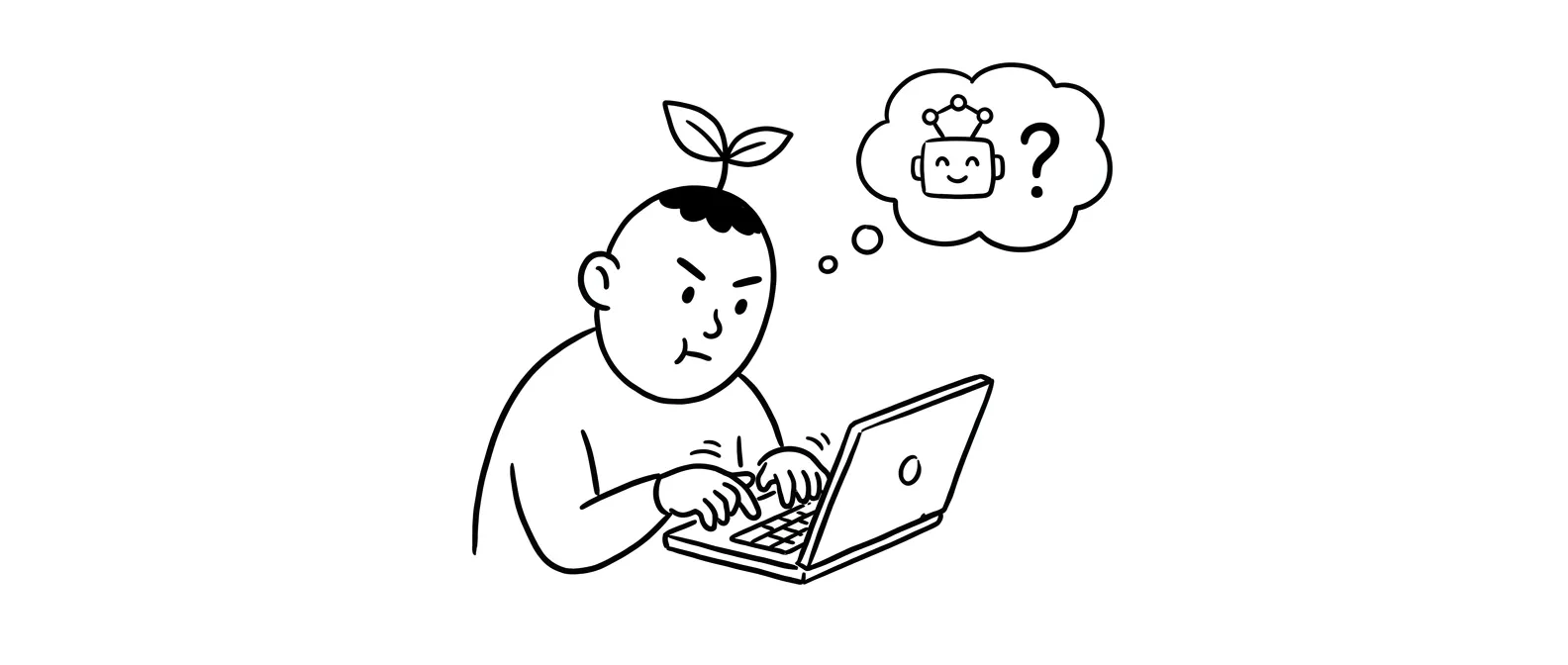
The Barrier Is Lower, but the Problems Have Come
In the past, a person could write an article because they knew how to put their thoughts into words. A person could paint because they had practiced for a long time. A person could code because they understood the rules and were willing to keep looking for answers after countless error messages.
Now, many results seem to be available just by asking AI. A person who doesn’t know design can make a decent poster. A person who doesn’t know how to code can build a website. Someone who doesn’t know how to start writing can also get a complete piece of text first.
Something similar has happened many times in history. After the printing press became widespread, being able to read was no longer special; what really mattered became whether you actually understood what you had read. Once calculators arrived, mental math stopped being proof of intelligence, and with GPS, knowing the way gradually stopped being a real skill. Whenever a new tool appears, an ability that once made people proud can turn into standard equipment that everyone has.
Now it’s AI’s turn. But problems come with it: each time AI finishes something for me, it seems that all I get is the result, while the whole process has been handed over. It’s like a trip. Is what matters only arriving at the destination, or that I actually walked the road and saw the scenery along the way?
Relying Too Much on AI Does Feel a Bit Empty
I love playing video games. Adding unlimited lives and unlimited money to a game feels great at first, but it gets boring after a while. By contrast, in CS2, being pinned down by an opponent and then fighting back with my own judgment and skills gives a much more real sense of accomplishment. So I’ve never quite understood why some people cheat in CS.
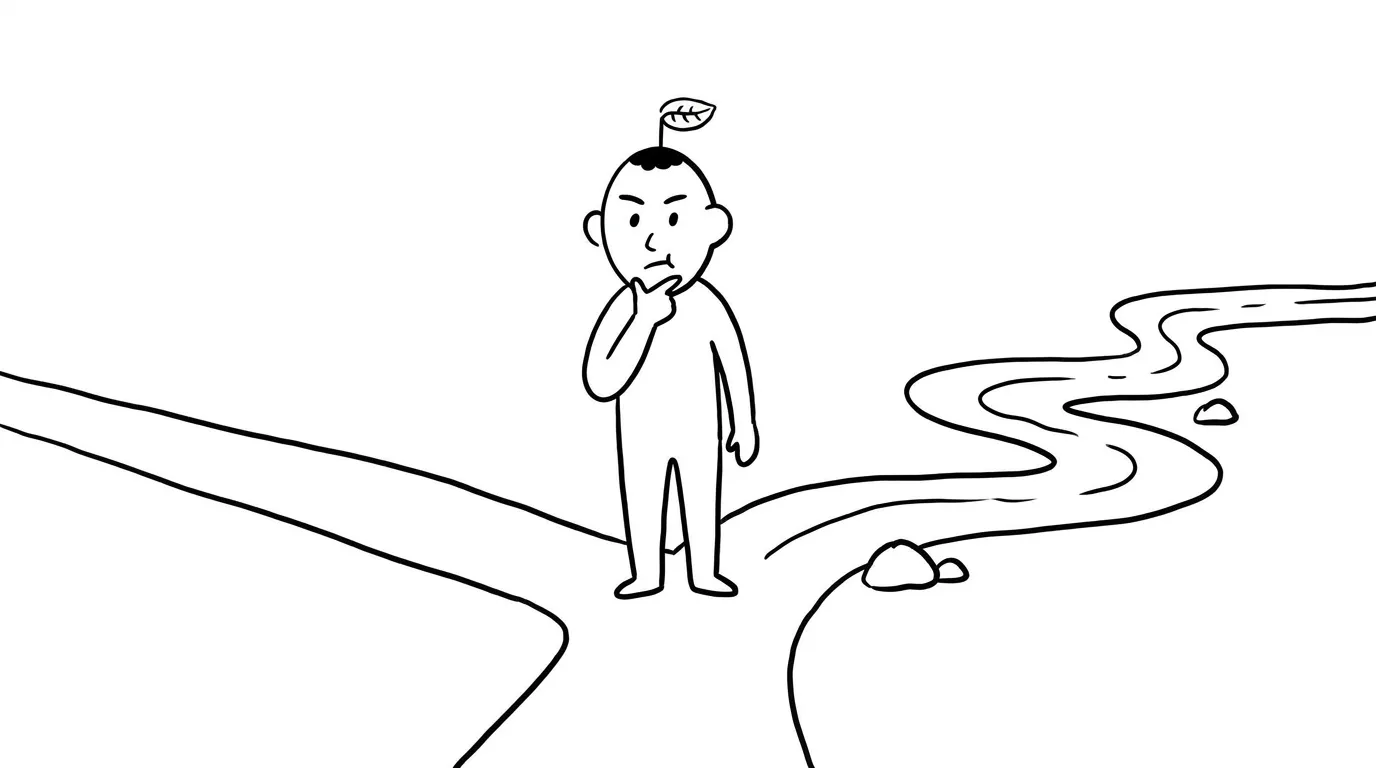
Sometimes AI feels a lot like a cheat tool. The thing does get done, and the result may even be better than what I could have made myself, but if none of my own thinking and trying went into it, it’s hard for me to feel proud. Worse, I might think I’ve learned something when all I’ve done is understand an answer that was already organized for me.
But I don’t want to reject AI because of that. The question has never been whether to use it, but what I hand over to it and what I keep for myself.
Trying to Find a Balance
Looking back, calculators didn’t make math meaningless. In the past, trigonometric functions had to be calculated step by step; with a calculator, the answer comes quickly. But if a person only knows the final number and doesn’t know what a trigonometric function is, what does that answer mean to them?
Fortunately, I at least know what trigonometric functions are. I may not know exactly how a calculator works out the result, but I understand the basic principles behind it. When I study, a calculator saves me from repetitive, tedious calculations, so I can put my energy into more complex problems. Our abilities have gradually shifted from “calculating fast” to “thinking deeply.”
So in my view, a tool is more like a box to stand on. It can’t walk for me, but it lets me see farther, from higher ground.
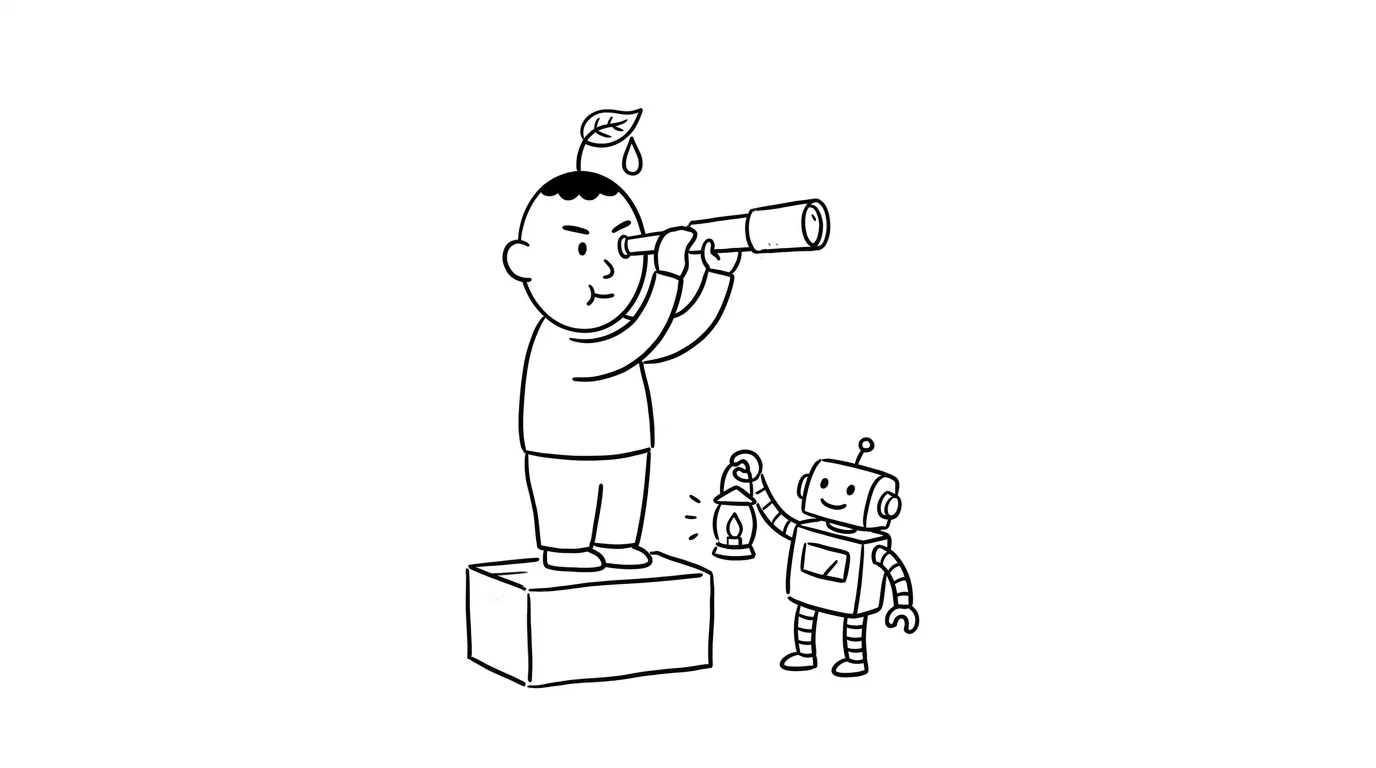
AI has also shown me some scenery I would never have looked at otherwise. Without AI, I probably wouldn’t have tried to build my own blog at all. AI was involved in the blog’s design, its code, and the edits to this article. But during the process, I kept asking, bit by bit, about the principles behind the code, and I also tried things and made changes myself, and then solved the new problems that came up.
Of course, I can’t claim to truly understand everything yet, but this blog really was something I helped make, not something that appeared out of thin air at the push of a button. It only took two or three days and saved me a lot of time, but what gives me a real sense of accomplishment isn’t “finishing fast”; it’s that I finally turned an idea into something I can see.
Now that I have a blog, I need to keep writing. Even if I still use AI when I write, to me, “making it first” is always more meaningful than staying stuck in the idea stage. The more I write, the more I can practice my English and gradually learn to express my ideas clearly. AI didn’t do the growing for me, but it helped me take the first step.
But AI Is Not a Calculator, After All
Still, AI is not quite the same as a calculator. A calculator’s results are usually deterministic: as long as the input and operations are correct, the answer generally won’t suddenly change into something else. But if I give the same question to AI, it may give a different answer each time, and it may even say something wrong in a very confident tone.
This is also why I think AI is more dangerous. A calculator mainly does the calculating for me, but AI may organize my words, analyze problems, and even draw conclusions for me. If I accept its answers without thinking, what I end up with may just be a piece of writing that “looks complete,” while I don’t truly understand what’s in it.
Ironically, even this reflection on AI was organized with AI’s help. I worry that it’s affecting how I think, yet I’m also genuinely using it to think. But precisely because of that, I need to remind myself to ask one more “why,” to actively verify, analyze, and judge, instead of believing an answer just because it sounds reasonable.
For me, this is the biggest difference between AI and a calculator: a calculator mainly improves my efficiency, while AI may change the way I understand problems. What it gives me isn’t just results; without my noticing, it may also be deciding for me how to ask questions, how to express myself, and even how to think.
A Tool, or a Weapon?
So I don’t want to treat AI as a shortcut that thinks and works hard for me. I’d rather have it handle the repetitive, tedious parts, so I can save my time for the thinking and practice that are truly worth investing in.
But this line isn’t always clear. I may also get lazy out of convenience, or, because the answer comes so fast, mistakenly think I already understand. Perhaps all I can do is ask myself one more question each time I use it: is it helping me keep moving forward, or has it already walked this stretch of the road for me?
I still use AI now, and I don’t think there’s anything shameful about it. I just hope that what’s left in the end isn’t only a nice result, but also my judgment, my attempts, and a bit of growth that truly belongs to me.
AI is, of course, a tool. But if I hand over my thinking and my choices too, it might really become a weapon: not one that hurts others, but one that quietly weakens me.